Demystifying Blue Cards (WWCC)
Due to the ongoing confusion around blue card requirements, the matter has been followed up with the Department of Justice in Queensland to obtain the following clarifications around the regulations…
Why Home Education Parents Are Exempt and When Regulations Apply
For the home education community, navigating the bureaucracy of child safety checks can be confusing. A common question among homeschooling parents—and observers from abroad looking at our system—is whether parents teaching their own children or participating in community group activities with their children are required to hold a “Blue Card” (Working with Children Check).
Based on official correspondence from Blue Card Services in Queensland, the answer for parents is a definitive no. However, understanding why creates a clearer picture of how the system works, especially when you bring external tutors or coaches into your home learning environment.
The Core Principle: Regulated Categories
The Blue Card system is not a blanket requirement for anyone who is ever around a child. Instead, it is a regulated system based on specific definitions.
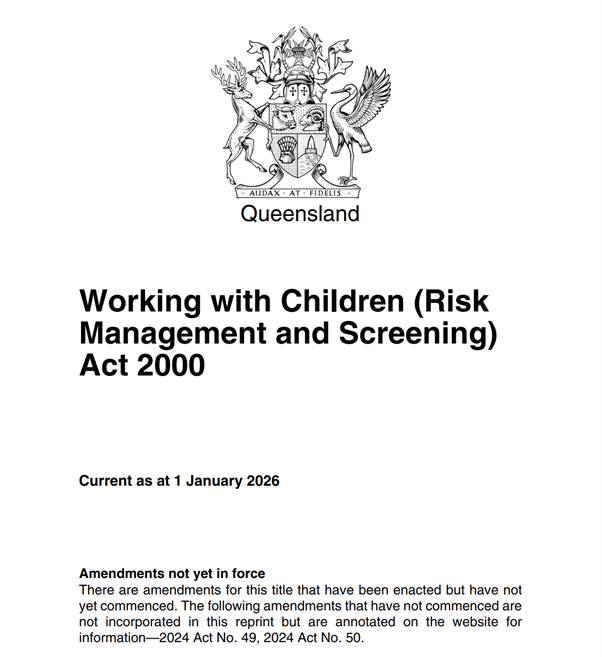
According to the Working with Children (Risk Management and Screening) Act 2000, a person only requires a blue card if their work or business falls into specific categories of regulated employment. If an activity does not fit into one of these pre-defined boxes, the blue card system simply does not apply.
The Working with Children (Risk Management and Screening) Act 2000
Why Home Education is Exempt
Recently, clarification was provided by the Manager of Community Information at Blue Card Services, regarding where home education fits within these laws.
The relevant government departments discussed the matter and specifically reviewed whether home schooling fell under two potential categories:
- Schools (employees other than teachers)
- Education programs conducted outside of school
The verdict? It fits neither.
In an email addressing this specific issue, the Manager explained that advice was sought from the Department of Education. The conclusion was clear:
“The advice provided was that home schooling does not meet the definition of a ‘school’ under the ‘schools – employees other than teachers’ category. Similarly, we were advised the ‘Education programs conducted outside of school’ category did not include home schooling, leading us to conclude that blue cards are not required for home schooling”.
Because home education does not fall into a regulated category, a blue card is not required for a parent that is home schooling their child, even in a community group or co-op setting. [Parent exemption information]
When the Rules Change: External Service Providers
While the parent does not need a card to participate in activities with their child, the situation changes immediately once third parties are involved. This is vital for the home education community to understand, particularly when organising co-ops with external services or hiring tutors.
If a parent engages someone else to provide a service, that person likely falls into a regulated category. The email from Blue Card Services highlights that a blue card may be required if a parent “engages a third party to provide a service or activity towards children”.
Key categories where external providers usually require Blue Cards that might be engaged with home educating families include:
- Private teaching, coaching, or tutoring: This includes math tutors, language teachers (e.g., French), or music teachers providing piano lessons.
- Sport and active recreation: This includes tennis coaches, personal trainers, or gym instructors.
The “Agreement to Work”
The trigger for this requirement is an “agreement to work.” The Manager explained that if you pay a private tutor, you have created an agreement.
“Under the Act, there needs to be an agreement to work between two parties. For example, a [homeschool] parent may pay a fee to a private tutor, creating an agreement to work. In this scenario, that individual would be required to hold a blue card… provided those activities were done on a commercial basis”.
It is important to note that this requirement generally applies to commercial (paid) arrangements. A neighbour helping out for free may fall under a volunteer exemption, provided they aren’t running a business.
“Drop-Off” Environments and Group Activities
A growing trend in the home education community is the use of “drop-off” activities, where students engage in group learning while parents leave the premises.
In these scenarios, the individuals supervising the children are generally considered service providers. If a person operates a business or is employed to run these sessions (such as a forest school leader, an art class teacher, or a sports coach), they are engaging in regulated employment.
- If the activity falls under “Private teaching, coaching or tutoring” or “Sport, active recreation, gyms and play facilities,” the provider must have a Blue Card.
- This applies even if the activity is recreational, such as dance, martial arts, or yoga.
For parents organising these groups, it is vital to ensure that any paid provider running a drop-off session holds a valid card, as they are providing a commercial service to children.
The “Personal Care” Trigger
Many home education groups operate as volunteer co-ops. Generally, parents volunteering in activities their own children participate in are exempt from needing a Blue Card.
However, there is a critical exception regarding personal care.
Even if you are a volunteer parent, you must hold a Blue Card if the activity involves close personal contact with a child other than your own. The legislation specifies that the parent volunteer exemption does not apply if:
“the service or activity includes close personal contact with a child, such bathing, toileting or dressing”,.
This means if you are in a co-op or drop-off environment and you are required to assist children (who are not your own) with toileting or changing clothes (for example, helping a child change into a costume or sports gear), you are legally required to hold a Blue Card.
The Volunteer Parent Exemption Explained
Many home education co-ops and gatherings rely heavily on “parent power.” The law acknowledges this through the Volunteer Parent Exemption, but there are specific boundaries to this rule that families must understand.
Across all regulated categories, a parent generally does not need a blue card to volunteer for activities in which their own child is participating. However, this exemption is not a blanket pass for all family members or all situations.
Who Counts as a “Parent”?
It is critical to note that the legislation defines a “parent” strictly. This exemption applies to biological parents, those exercising parental responsibility, or those regarded as parents under Aboriginal or Torres Strait Islander custom.
Crucially, grandparents, aunts, uncles, and other relatives are not considered parents for this exemption.
- Scenario: If a grandmother volunteers to run a home education art group where her grandchild is present, she cannot use the parent exemption and must hold a Blue Card if the activity falls into a regulated category (such as private teaching or arts instruction).
When the Exemption Does Not Apply
Even for biological parents, the exemption is void in specific scenarios. You will need a Blue Card if:
- You volunteer for a group your child is not in: If you are coaching the teenage math group, but your own child is in the primary school group, you are not volunteering for an activity your child is “participating in.” Therefore, you need a card.
- Overnight Camps: If a home education group organises an overnight camping trip or overnight excursion, all volunteering parents running the event need Blue Cards, regardless of whether their child is attending. This is not the same as a group of families going camping together at the same location with their own children and caring for their own children independently of each other.
- Restricted Persons: If an individual is a “restricted person” (someone legally disqualified from working with children), they cannot rely on this exemption under any circumstances.
The Myth
A significant point of frustration for home educators is when insurance companies or venue holders demand parents hold blue cards to obtain public liability insurance or utilise a space. The correspondence from Blue Card Services suggests this is often a misunderstanding of the law by these parties.
The Manager noted that insurance companies often express a “desire” for blue cards that is “mistaken for a lawful requirement”.
“For example, where insurance companies say – ‘Must comply with any Working with Children jurisdiction requirements’ this does not mean someone must obtain a blue card – it means a person must simply comply, if the legislation requires it. As you can see from the explanation above… blue cards are not a requirement of home schooling”.
Applying for a card just to satisfy an insurer is described by the department as “over compliance” and is not recommended, as it places “over reliance on the holding of a blue card as a means to promote child safe environments”.
Summary
For the home education community, the regulatory landscape is clear:
- Parents: Do not need Blue Cards to home educate their own children or participate in group activities with their children because the activity is not a regulated category of employment or business.
- Tutors/Coaches: Do need Blue Cards if they are paid to teach or coach your child, as this falls under “private teaching” or “sport” categories.
- Drop-off Activity Leader: The provider of such activities MUST have a Blue Card if paid/commercial as this falls under “private teaching” or “sport” categories.
- Volunteer helping with Toileting/Dressing: The volunteer MUST have a Blue Card.
- Insurers: May ask for cards, but if the legislation doesn’t require one, you are technically compliant without one.
Understanding these distinctions ensures we protect our children by ensuring the right people (external providers) are screened, without burdening parents with unnecessary bureaucracy.